The Correspondence: May 1971
In my research into the events of 1988 and 1971, I was allowed to read a letter from early May 1971. I could not photograph it. I was told not to share names.
The letter looked ordinary. Plain stationery. Careful handwriting. Domestic in tone. What struck me was not what it described, but what it repeated. The writer spoke of dread. Of weather that refused to settle. Of air that felt too close for spring.
She described her grandmother’s stories about the hospital:
- Agitation: Patients would grow restless without clear cause.
- Contagion: Unrest would spread from ward to ward as though carried on something unseen.
- Frequency: No calendar marked those days. “They come and go,” the grandmother had said.
The writer’s mother spoke of similar periods—times when people were denied their usual freedom. She mentioned the summer of ’45 more than once but would not elaborate, only that she had not been permitted outdoors for several days.
One line in the letter seemed ordinary at first glance:
Even with the windows open, the air would not turn.
Nothing had happened, she wrote. That was the strange part. Nothing at all. Yet everyone seemed shortened in temper. Quick in movement. The creek behind the house ran quiet despite recent rain. Windows swelled in their frames. Evenings felt closer than they should.
The Property: September 1988
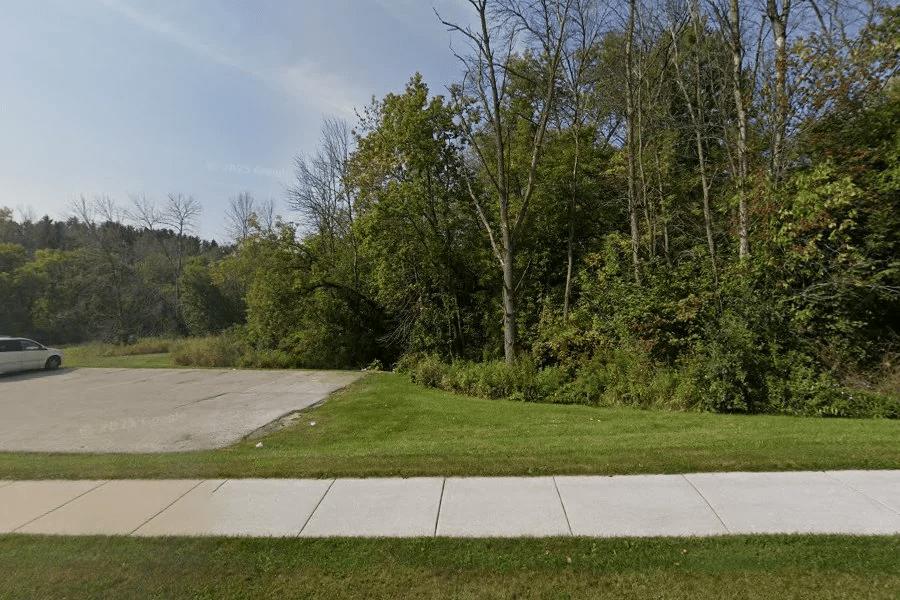
Seventeen years later, a separate set of notes described a property off Mill Road. The author never submitted them formally. The site had been disturbed repeatedly over the last century:
- Earthworks
- Timber
- Brick
- Scrap
- Now trees again
The land had not remained in one state long enough to settle. The notes mentioned irregular soil density, uneven growth, and compacted lower ground near the creek. Sound behaved inconsistently along the cut bank; voices carried strangely, sometimes absorbed altogether.
The Observation: At approximately 4:15 p.m., the wind dropped without warning. For several minutes, the air would not turn.
The Survey: 1908
While reviewing these documents, I found an earlier field journal from 1908. A surveyor examining raised ground near the same waterway described subtle elevations beneath tree cover and smoke from a test fire lifting, then pressing downward.
He recorded:
“The air would not turn near the rise.”
The same words. No citation. No cross-reference. Separated by decades.
Patterns of Disturbance
I returned to my own notebook, charting regional disturbances over the last century. Intervals appeared every seven to eight years. Sometimes longer. Never shorter.
- Nature: Not always tragedy.
- Symptoms: Sometimes only agitation. Sometimes disappearance. Sometimes nothing one can point to.
Without thinking, I had written in the margin during a site visit last spring: The air would not turn. I do not recall choosing the phrase. It was not a quotation at the time. Or so I believed.
Conclusion
The land does not change; only what we build upon it. Each generation reshapes the ground. Each leaves something unfinished.
It is not decay. It is repetition.
In certain seasons, not marked on calendars, the atmosphere grows close. Windows swell in their frames. Sound narrows near the creek cut. Tempers shorten. Sleep thins. Nothing occurs, and yet something presses.
The air would not turn. It comes and goes.
 Eric Roseberry | Builder of Nightmares